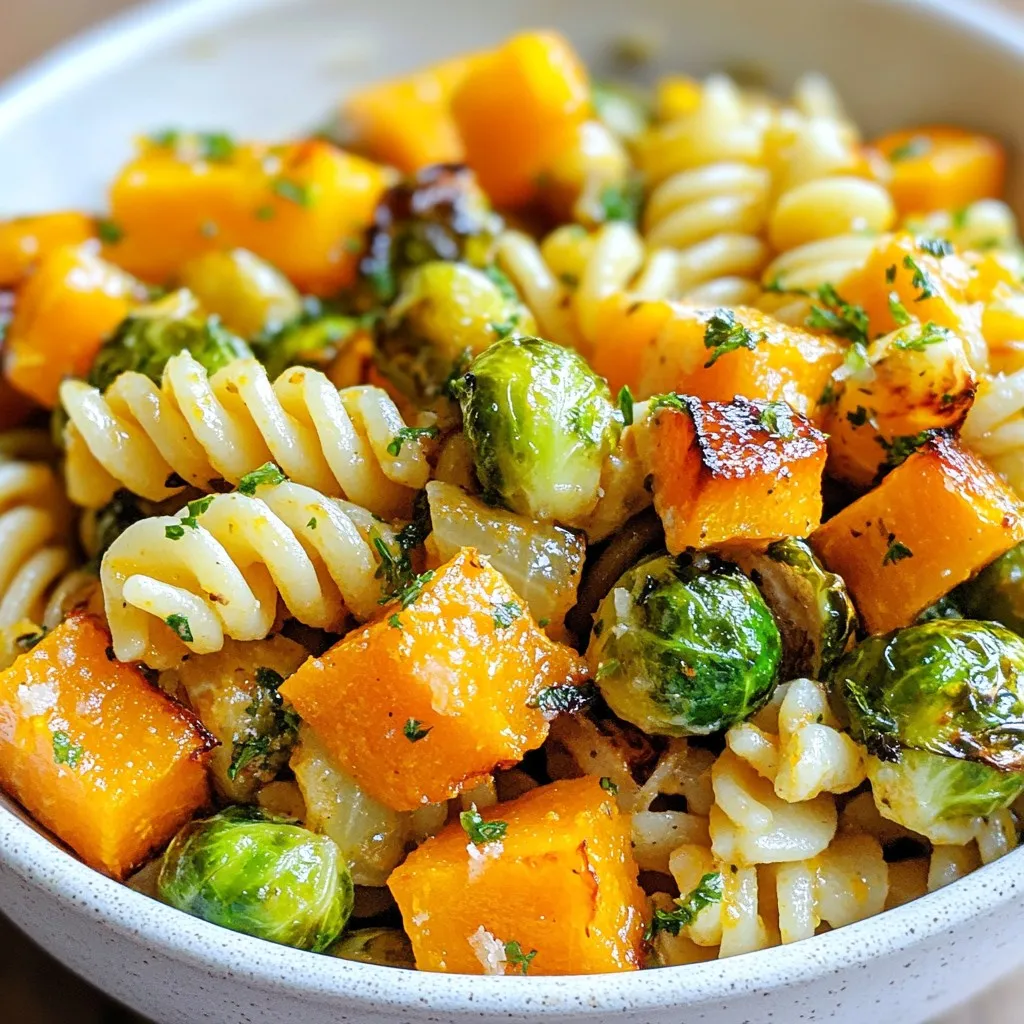
If you’re searching for a simple yet delicious meal, Butternut Squash Brussels Pasta is perfect. This dish combines fresh butternut squash and Brussels sprouts with your choice of pasta. Toss in some garlic and thyme for flavor, and you’ve got a healthy dinner in no time. Let’s dive into this flavorful recipe that’s easy to make and even easier to love!
Why I Love This Recipe
- Seasonal Flavors: This dish perfectly captures the essence of fall with its warm flavors of butternut squash and Brussels sprouts.
- Simple Preparation: With just a few steps, you can create a hearty meal that looks and tastes gourmet.
- Health Benefits: Rich in vitamins and fiber, this pasta dish is both nutritious and satisfying.
- Versatile: Customize this recipe by adding your favorite protein or substituting the pasta for a gluten-free option.
Ingredients
Main Ingredients
– 8 oz pasta (fusilli or penne preferred)
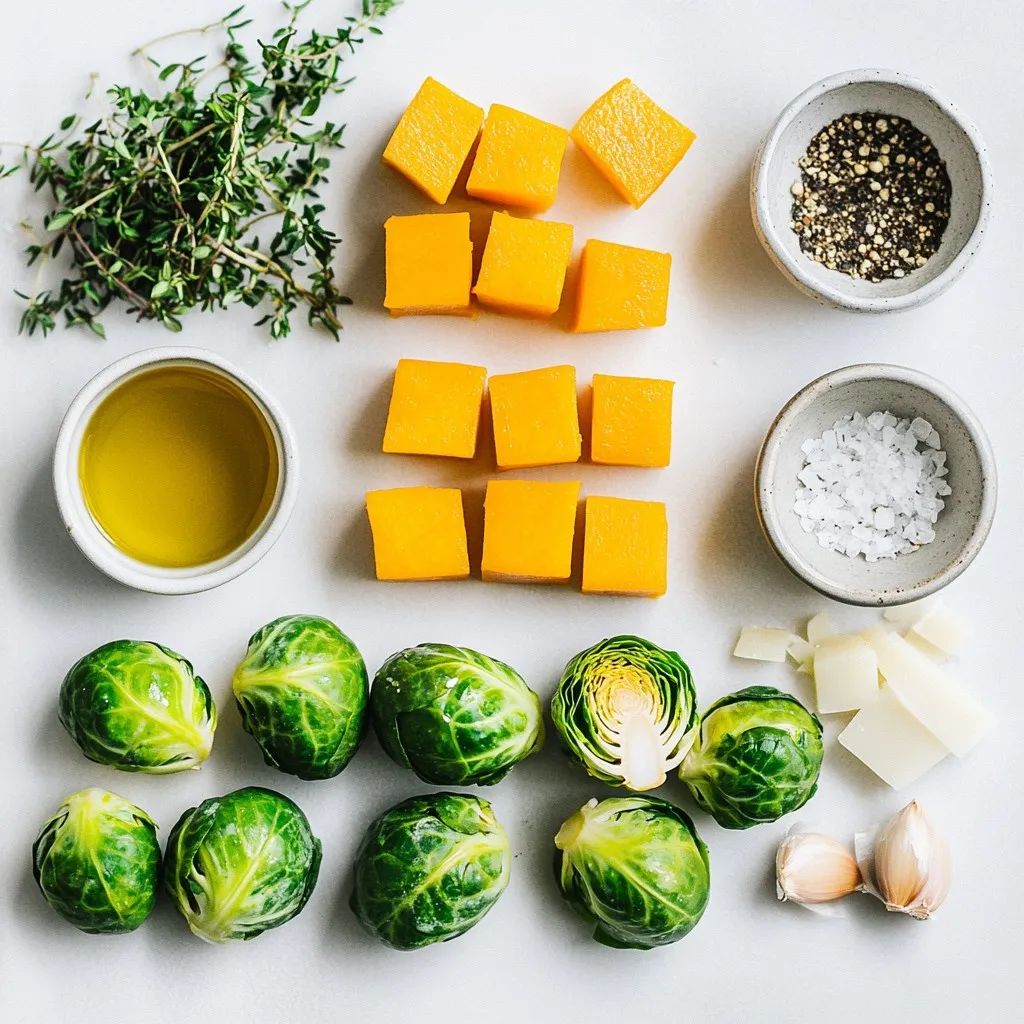
– 2 cups butternut squash, peeled and diced
– 2 cups Brussels sprouts, trimmed and halved
The main ingredients in this dish create a warm and hearty meal. Fusilli or penne pasta works best here. Both types hold sauce well. Butternut squash adds natural sweetness. Brussels sprouts give a nice crunch. These fresh veggies make the dish colorful and healthy.
Seasonings & Condiments
– 3 tablespoons olive oil
– 3 cloves garlic, minced
– 1 teaspoon dried thyme
– Salt and pepper to taste
Seasonings bring out the flavor in the pasta. Olive oil adds richness and helps with roasting. Garlic gives a lovely aroma and taste. Thyme adds a touch of earthiness. Don’t forget salt and pepper! They enhance all the flavors in the dish.
Optional Ingredients
– ½ cup vegetable broth
– ¼ cup grated Parmesan cheese (or nutritional yeast for a vegan option)
You can make this dish even better with optional ingredients. Vegetable broth adds depth and moisture. Parmesan cheese gives a savory touch. For a vegan option, use nutritional yeast. It provides a cheesy flavor without dairy. These options let you customize the dish to your taste.
Step-by-Step Instructions
Roasting the Vegetables
First, preheat your oven to 400°F (200°C). Grab a baking sheet and line it with parchment paper. This makes for easy clean-up later. In a large bowl, add 2 cups of diced butternut squash and 2 cups of halved Brussels sprouts. Drizzle 2 tablespoons of olive oil over them. Toss the vegetables well to coat. Sprinkle salt, pepper, and 1 teaspoon of dried thyme. Mix again until all pieces are seasoned. Spread the vegetables in a single layer on the baking sheet. Roast them for 25-30 minutes. Stir halfway through to ensure even cooking.
Cooking the Pasta
While your veggies roast, fill a large pot with water and add a pinch of salt. Bring the water to a rolling boil. Once boiling, add 8 oz of your favorite pasta, like fusilli or penne. Cook it according to the package instructions until it’s al dente. This usually takes around 8-10 minutes. Before draining, reserve ½ cup of pasta water. This starchy water will help bind your dish later.
Combining Ingredients
Once the veggies are done roasting, take them out of the oven. In a large bowl, combine the cooked pasta, reserved pasta water, and ½ cup of vegetable broth. Add the roasted vegetables to this mix. Stir everything well to combine. If you like, you can sprinkle in ¼ cup of grated Parmesan cheese for added flavor. Mix until the cheese melts and everything is coated. Finish by garnishing with chopped fresh parsley. Enjoy your delicious meal!
Tips & Tricks
Perfecting the Roast
To get a great roast, start with the right temperature. Preheat your oven to 400°F (200°C). Toss the butternut squash and Brussels sprouts with olive oil, salt, and thyme. Spread them out on a baking sheet. Make sure they are in a single layer. This helps them roast evenly. Stir the veggies halfway through cooking. This step helps achieve a nice caramelization. You want them tender and slightly crispy.
Cooking Pasta to Perfection
Cooking pasta just right is key. Bring a large pot of salted water to a boil. Add your pasta and cook it until it is al dente. This means it should be firm to the bite. Avoid mushy pasta by checking the package instructions for timing. Reserve some pasta water before draining. This water can help bind the sauce later.
Flavor Enhancements
To boost the flavor, think beyond just salt and pepper. Add extra herbs like rosemary or basil for depth. You can also sprinkle in some red pepper flakes for heat. If you love a cheesy flavor, consider using nutritional yeast. It gives a nice umami taste without dairy. Experiment with flavors to find what you enjoy most.
Pro Tips
- Roast for Maximum Flavor: Allow the butternut squash and Brussels sprouts to caramelize in the oven. This enhances their natural sweetness and adds depth to the overall dish.
- Save Pasta Water: Always reserve some pasta cooking water before draining. It can be used to adjust the sauce’s consistency and help it cling to the pasta better.
- Herb Variations: Experiment with different herbs like rosemary or sage instead of thyme for a unique flavor profile that complements the autumn vegetables.
- Garnish for Freshness: Don’t skip the fresh parsley at the end. It adds a burst of color and a fresh flavor that brightens up the dish.
Variations
Vegetarian Options
You can easily make this dish meatless. Instead of using chicken broth, stick with vegetable broth. You can also skip the Parmesan cheese or use nutritional yeast for a vegan twist. Add a handful of spinach or kale for extra greens. They add color and boost nutrition. This way, you keep it light and fresh.
Gluten-Free Alternatives
If you need a gluten-free meal, choose gluten-free pasta. There are many options like rice, corn, or chickpea pasta. These work well with the sauce and veggies. Just watch the cooking time. Gluten-free pasta can cook faster than regular pasta. Always check the package for best results.
Seasonal Variations
You can change the veggies based on what’s in season. In spring, try asparagus or peas. In summer, add zucchini or cherry tomatoes. In fall, sweet potatoes can replace butternut squash. Each season brings new flavors. Mix and match to keep it exciting!
Storage Info
Refrigeration Guidelines
To store your leftovers safely, let the dish cool down first. Then, place it in an airtight container. Make sure it is tightly sealed. This keeps the flavors fresh. You can store it in the fridge for up to three days.
Freezing the Dish
If you want to freeze the dish, first cool it completely. Then, divide it into smaller portions. Use freezer-safe containers or bags for storage. Press out any air before sealing. When you are ready to eat, thaw it overnight in the fridge. Reheat on the stove or in the microwave until hot.
Shelf Life
In the fridge, the Butternut Squash Brussels Pasta lasts three days. In the freezer, it can stay good for up to three months. Always check for any signs of spoilage before eating. If it smells off or looks strange, it’s best to toss it.
FAQs
Can I use frozen butternut squash and Brussels sprouts?
Yes, you can use frozen butternut squash and Brussels sprouts. Just keep in mind that frozen veggies may have more water. This can change the texture of your dish. To fix this, you can thaw them first and pat them dry. This step helps prevent sogginess.
What can I substitute for Parmesan cheese?
If you need a substitute for Parmesan cheese, try nutritional yeast. It adds a cheesy flavor but is dairy-free. You can also use Pecorino Romano or Grana Padano for a similar taste. Just remember, these options change the flavor a bit. Choose what fits your diet and taste.
How do I make this a one-pot dish?
Making this a one-pot dish is easy! Start by cooking the pasta in a large pot. When it’s almost done, toss in the butternut squash and Brussels sprouts. This way, they cook together. Once the pasta is tender, add the broth and cheese. Stir it all together and enjoy!
This blog post covered a hearty pasta dish with butternut squash and Brussels sprouts. You learned about key ingredients like pasta types, fresh veggies, and essential seasonings. I shared detailed steps for roasting, cooking, and combining. You also found helpful tips for perfect results and variations for different diets.
In closing, this dish is versatile and easy to make. Experiment with flavors and ingredients. Enjoy your cooking adventur